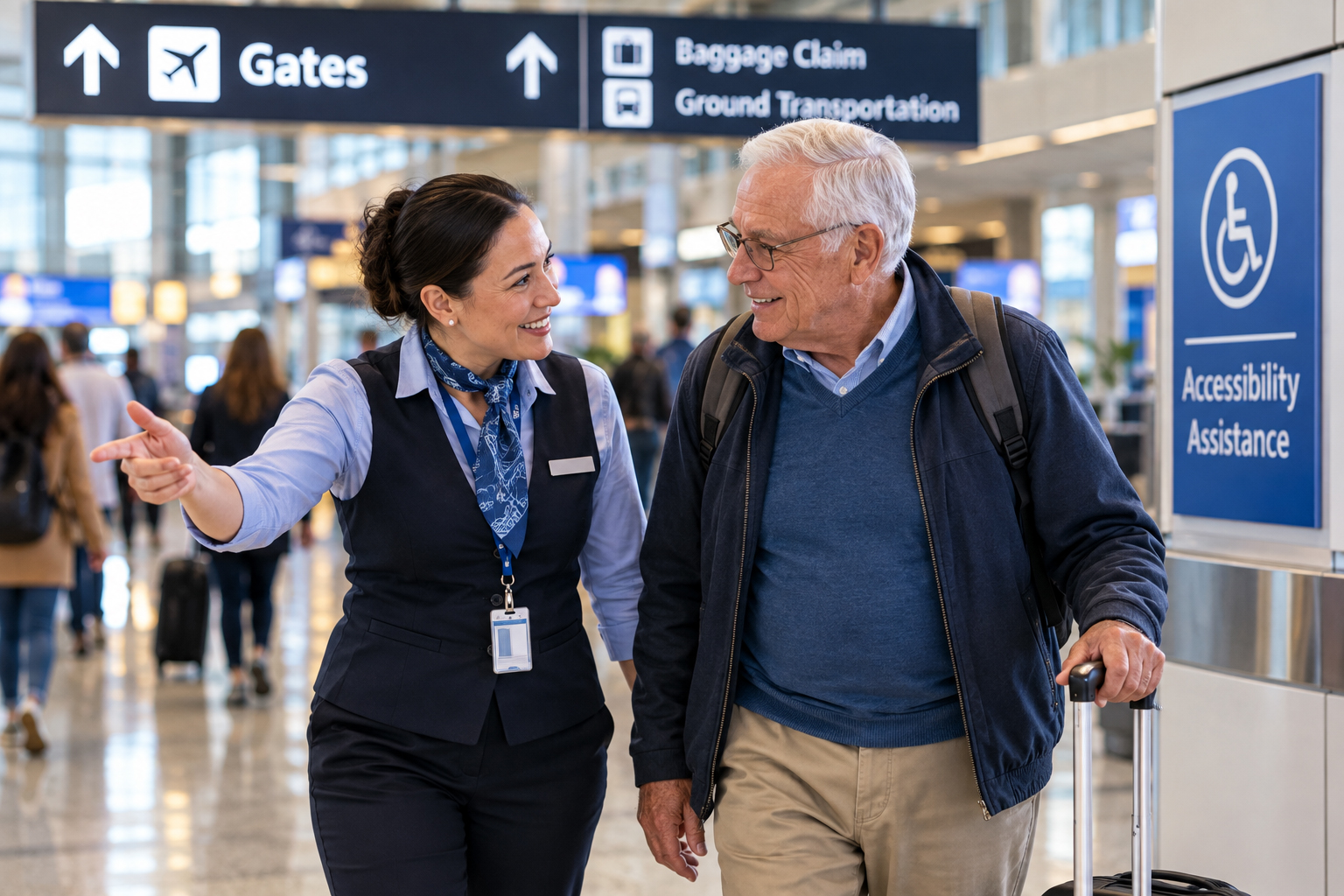
Several airports across the United States have taken steps to become more dementia-friendly, helping make air travel more accessible and comfortable for people living with dementia and their caregivers. Phoenix Sky Harbor International Airport (PHX) is currently described as a certified dementia-friendly airport, while Tulsa International Airport (TUL) was the first U.S. airport to receive a dementia-friendly designation. Other airports, including Chicago Rockford International Airport (RFD), Minneapolis–Saint Paul International Airport (MSP), Charlotte Douglas International Airport (CLT), Seattle-Tacoma International Airport (SEA), and several others, participate in dementia-friendly airport initiatives and working groups. These efforts vary by airport, so travelers should check with their departure and arrival airports in advance to learn what specific services and accommodations are available.
A dementia-friendly airport is designed to reduce confusion, anxiety, and sensory overload while helping travelers maintain as much independence as possible. This can include clear and easy-to-follow signage, straightforward wayfinding, quieter areas, accessible restrooms, and staff members who have received dementia-awareness training. Some airports also offer programs that allow travelers to practice navigating the airport before an actual trip, assistance from trained airport personnel, or resources for caregivers. The goal isn’t simply to accommodate a person with dementia—it is to create an environment where airport employees understand how dementia can affect communication, navigation, memory, and behavior and know how to respond with patience and respect.
Even when an airport does not have a formal dementia-friendly designation, families can take steps to make the travel experience more dementia-friendly. Contact the airport and airline ahead of time to ask about accessibility services, wheelchair or escort assistance, quieter areas, and procedures for travelers who may need additional support. Build extra time into the itinerary, keep important information and medications organized, use simple verbal directions, and consider identifying yourself as a caregiver when additional assistance may be needed. Travelers can also look for programs such as the Hidden Disabilities Sunflower initiative, where available, to discreetly communicate that they may need additional patience or assistance. With thoughtful planning and greater awareness from airport staff, any airport can become more welcoming and supportive for people living with dementia.