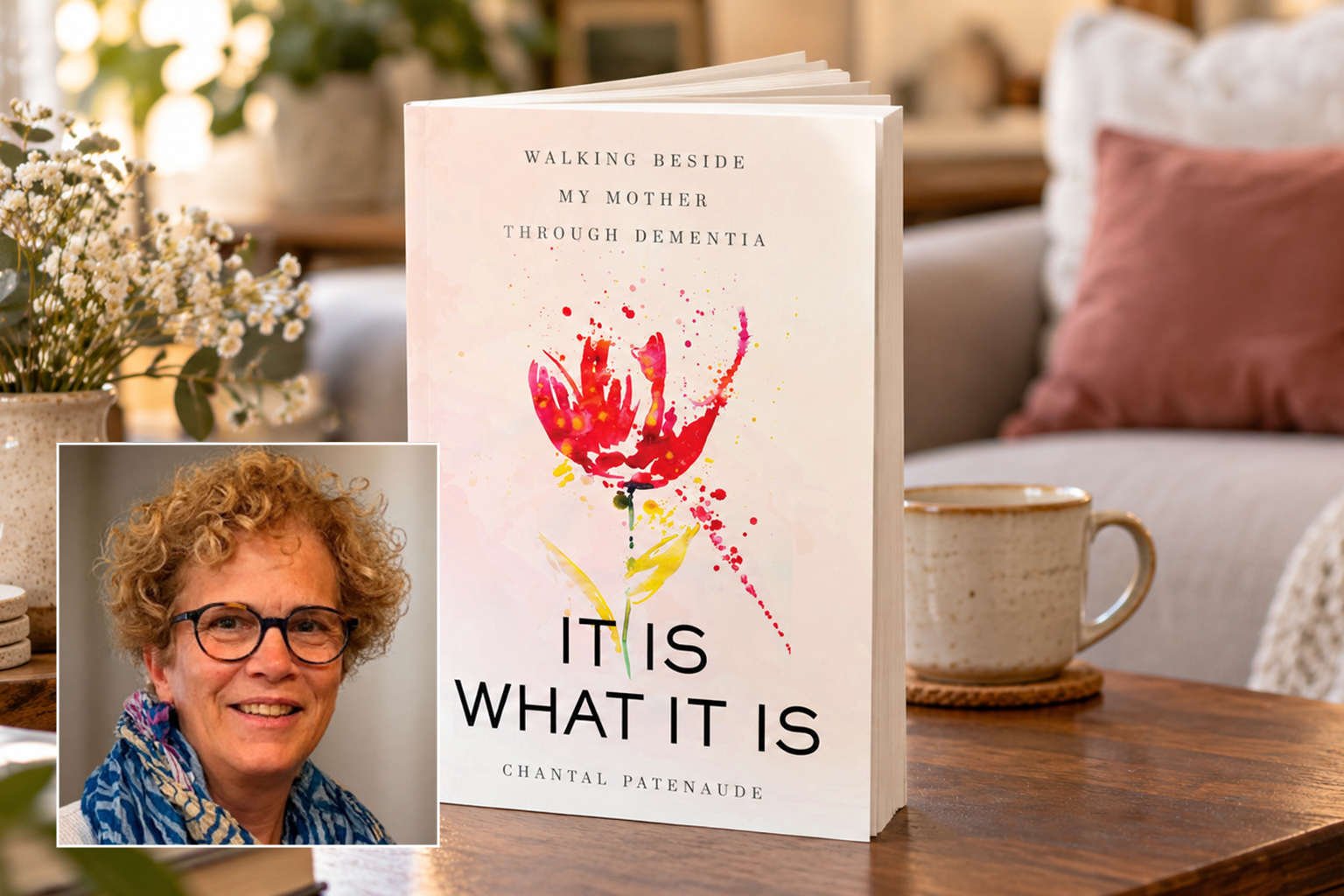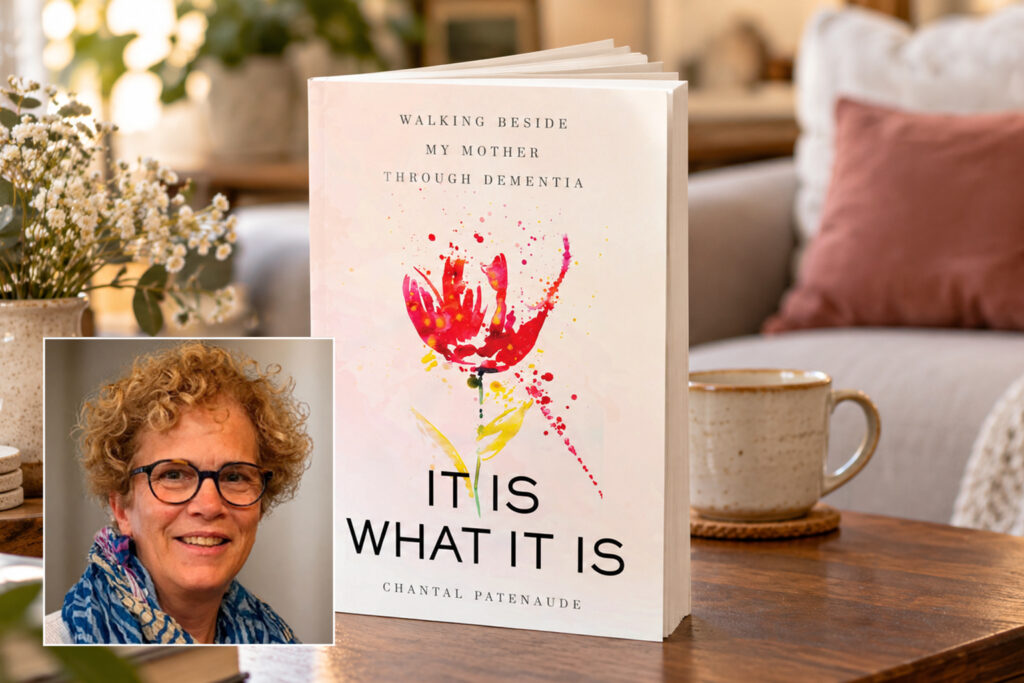
Caring for a parent with dementia can bring uncertainty, grief, exhaustion, love, humor, and moments of unexpected connection. In her memoir It Is What It Is: Walking Beside My Mother Through Dementia, author Chantal Patenaude shares her personal experience caring for her mother through frontotemporal dementia and the lessons she carried with her after her mother’s death.
What inspired you to write It Is What It Is: Walking Beside My Mother Through Dementia, and when did you realize that your experience with your mother was a story you wanted to share?
I hadn’t planned to write a book while I was caring for my mother.
After she died, I kept replaying moments from those years in my mind, often at unexpected times. Some were difficult, some were funny, some were just everyday moments that had stayed with me. I often found myself thinking about other people who were living or who had lived through something similar.
About six months into my grief, I decided to start writing about it, but the first time I sat down to put those memories on paper, I had a full-blown panic attack. I clearly wasn’t ready. It was almost another six months before I tried again. This time, I was able to keep going, and writing became a way of putting into words what we had lived through.
As I wrote, I knew I wanted to share what caregiving can look and feel like from the inside. Every person living with dementia is different, every family’s situation is
different, and no two caregiving experiences are the same. But there are threads that connect us: the uncertainty, the shifting roles, the guilt, the anticipatory grief, but also the love and the moments of connection that can exist right alongside it.
My mother had frontotemporal dementia (FTD). In her case, language was affected first, rather than memory loss or behavior. It is not what most people expect when they hear the word dementia, and I felt that part of our experience was important to share.
It Is What It Is is one mother and daughter’s story, a personal account of how
dementia changed our lives and our relationship. I share our journey, but I don’t offer a roadmap. I simply tell our story as honestly as I can.
My hope is that someone might recognize something of their own experience in ours and feel seen and understood.
You made a personal commitment to try to make your mother smile whenever you saw her. How did that intention shape the way you approached caregiving, particularly during difficult periods?
The decision to try to bring a smile to my mother’s face every time I saw her grew out of one small moment that stayed with me.
My mother had lost her hearing aids. She had never adjusted to them and really
didn’t like wearing them. After checking all the usual places without finding them, I noticed that she was becoming increasingly anxious. So I stopped and told her it was okay. We would manage without them. I told her we would simply speak louder from then on, exaggerating my voice more and more until we both started laughing.
The hearing aids were still lost, but the tension was gone, and she was smiling. I realized that even when I couldn’t change what was happening, I could sometimes change how a moment felt.
From then on, I carried that intention with me whenever I saw her. Some days a
smile came easily; other days, it didn’t come at all. It wasn’t about succeeding every time. It was about paying attention to her and to what brought her comfort or joy.
As things changed, I learned that making the most of our time together meant
meeting her where she was and adapting what we did together. When visits to the National Gallery were no longer possible, we looked through art books. We travelled again through her photo albums, revisiting the tulips of Amsterdam and the piazzas of Florence. We danced to oldies in her suite, watched children playing in the park, shared ice cream, held hands or simply lay next to each other in silence. So much had changed, but when she smiled, I knew we could still find our way to each other.
For families currently walking beside someone living with dementia, what is the most important lesson you hope they take away from your book?
If there is one thing I hope families take from our story, it is that they don’t have to carry everything alone. I hesitate to call it a lesson, however, because everybody’s situation is unique.
As my mother’s needs increased, caregiving took up more and more of my life, but life outside of it didn’t stop. There was still work, family and everything else that needed my attention. I was fortunate to have built a team around us: my siblings, companions for my mother, a dementia coach and healthcare professionals,
something I know isn’t within everyone’s reach. Even with their support, I was often overwhelmed and exhausted, but having that team helped me stay afloat.
Support can take many forms, and I think it is worth finding out what is available. It was only while writing and researching the book that I discovered the larger
community of people and organizations devoted to dementia and caregiving. There were support groups, caregiver networks, and resources I hadn’t known existed, and I wish I had found them earlier.
I also think it’s important to talk about self-care. Caregivers hear it all the time: take care of yourself, make time for yourself. The advice sounds simple, but when a loved one depends on you, finding that time can be difficult or even impossible. I found that sometimes the smallest things helped: stepping outside for a few minutes, calling a friend, going for a walk or reading a few pages of a book. It didn’t have to be much, but even a little space to breathe could make a difference.
Through all of it, I learned to pay attention to what was still possible with my mother. I couldn’t stop dementia from progressing, but I chose to live in the now and make the most of the time we had together. The book shares what it was like for us. If someone sees something of their own experience in ours, I hope it can walk beside them for part of the way.
Read more about Chantal Patenaude
It Is What It Is: Walking Beside My Mother Through Dementia on Amazon